
Hotel operations depend on smooth handoffs between reservations, check-in and check-out, housekeeping, guest communication, maintenance, billing, and compliance. To streamline hospitality operations, teams need clear processes and timely information across these responsibilities, not just a faster front desk. When updates are scattered across systems or passed along manually, everyday work becomes harder to coordinate.
That is why hospitality operations management matters: it aligns people, procedures, and resources so a property can serve guests while keeping daily work on track. This guide covers what hotel operations involve, what managers oversee, and how hospitality ERP can support connected workflows, clearer information, and better-informed decisions. It also explains where ERP can reduce repetitive coordination and why strong procedures and staff communication remain essential, with practical ways to make hotel operations more efficient in Kenya.
Key Takeaways
- Map the guest journey from reservation through checkout to spot handoffs that slow service or create repeated work.
- Separate front-of-house and back-of-house responsibilities, then clarify how teams share updates and resolve requests.
- Set clear operating procedures and management responsibilities so staff can coordinate tasks, schedules, and service standards.
- Assess where hospitality ERP can connect operational information and support more informed decisions about efficiency.
1. What are hotel operations?
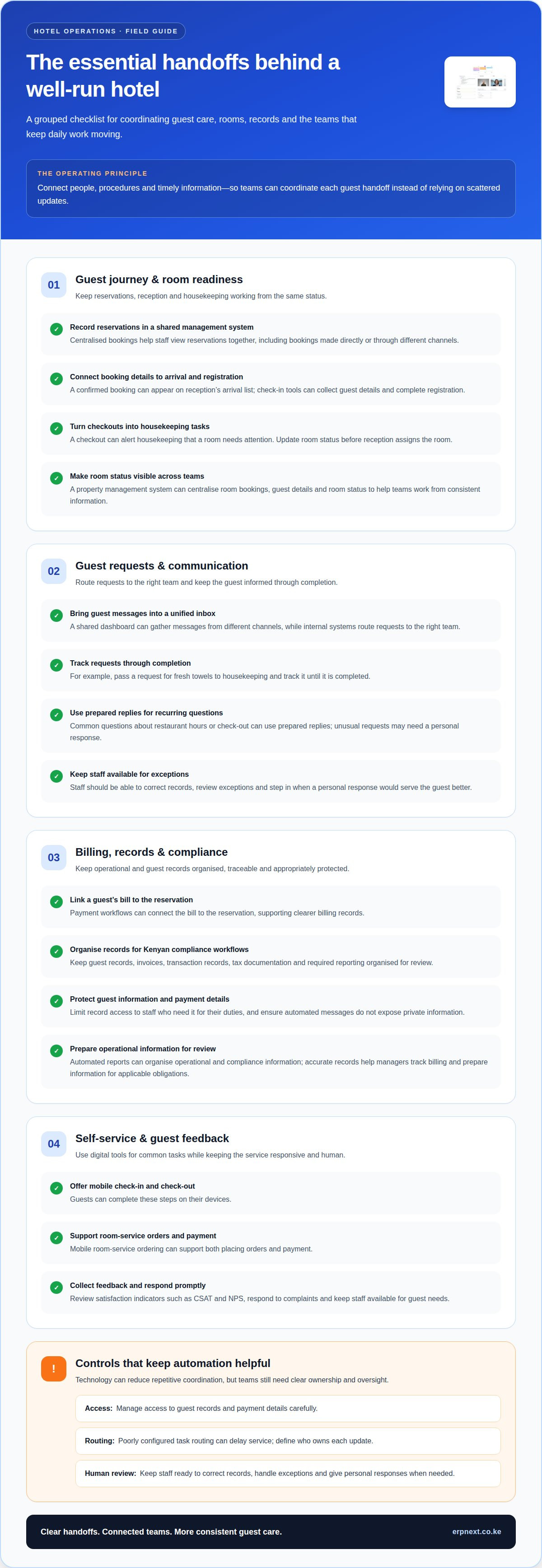
Hotel operations are the daily processes that keep a property running and guests cared for. They include reservations, registration, check-in and check-out, housekeeping, guest communication, maintenance, billing, and compliance. A reservation, for example, creates work for reception, room preparation, and payment processing. Coordinating these handoffs helps teams deliver a consistent guest experience and protect revenue.
For Kenyan hotels and restaurants, practical compliance workflows should organise guest records, invoices, transaction records, tax documentation, and required reporting. Accurate records help managers track billing and prepare information for applicable obligations. Handle guest information carefully, limiting access to staff who need it for their duties.
Hotels can automate bookings by recording reservations in a shared management system, then use check-in tools to collect guest details and complete registration. Payment workflows can connect a guest’s bill to the reservation, while housekeeping schedules can turn checkouts into room-cleaning tasks. Automated reports can organise operational and compliance information for review.
Communication matters at every handoff. A unified inbox can bring guest messages from different channels into one dashboard, while internal systems route requests to the right team. For example, a guest’s request for fresh towels can be passed to housekeeping and tracked through completion. Prepared replies can handle recurring questions about restaurant hours or check-out.
Self-service options can simplify common tasks. Mobile check-in and check-out tools let guests complete steps on their devices, while mobile room-service ordering can support orders and payment. Hotels can also collect real-time feedback, respond promptly to complaints, and review satisfaction indicators such as CSAT and NPS. Timely, helpful service supports positive reviews and repeat visits.
Automation needs thoughtful controls. Manage access to guest records and payment details carefully, and ensure automated messages do not expose private information. Poorly configured task routing can delay service, while impersonal replies may frustrate guests with unusual requests. Keep staff available to review exceptions, correct records, and step in when a personal response would serve the guest better.
2. What is hospitality operations management?
Hospitality operations management coordinates the teams, schedules, supplies, and systems behind each guest stay or meal. Front-of-house work includes reception, concierge, restaurant service, and bar service. Back-of-house work includes housekeeping, kitchen preparation, maintenance, purchasing, and stock control. For example, reception records a late checkout, housekeeping adjusts room cleaning, and management updates room availability.
For hotels and restaurants in Kenya, operational challenges include coordinating busy service periods, keeping booking and stock information aligned, and sharing timely updates between teams. Managers can address these pressures with clear procedures, shared schedules, and reviews of how guest feedback relates to service delays or inventory gaps.
A property management system can centralise room bookings, guest details, and room status. Integrating it with other hotel systems can reduce duplicate entry and help teams work from consistent information. For instance, a confirmed booking can appear on reception’s arrival list, while a checkout can alert housekeeping that a room needs attention. Before connecting workflows, managers should map the information each system needs.
Centralised reservations help staff view bookings together, whether guests book directly or through different channels. Inventory controls can link kitchen or bar usage with purchasing, helping managers identify what needs replenishment. A restaurant can monitor ingredients, while a hotel coordinates room availability and housekeeping assignments. Bars and nightlife venues can also use schedules and stock records to prepare for changing demand.
Technology should support the work rather than add another disconnected task. Start by identifying a specific bottleneck, such as repeated booking entry or delayed room-status updates. Then define who owns each update and how staff will act on exceptions. A connected hospitality management system can help bring operational workflows into a clearer view, supporting smoother coordination and guest satisfaction.
3. Hospitality operations management responsibilities
Managers turn service standards into repeatable processes across reception, food service, housekeeping, and maintenance. They assign ownership, monitor completion, and resolve handoff problems. For example, marking a room ready only after housekeeping updates its status helps reception avoid assigning an unprepared room. Managers also review guest feedback and satisfaction indicators to identify recurring service issues.
Financial management means keeping operational records clear enough to support informed decisions. Managers review revenue, expenses, supplier invoices, payroll information, and departmental performance with the finance team. A restaurant manager, for instance, can compare ingredient purchases with sales records to investigate unusual stock usage. Centralised records make it easier to trace a transaction from its source document to a management report, while keeping operational oversight distinct from outsourced accounting.
Reservations and queues need active coordination. Digital restaurant reservations can show expected arrivals, while staff use that information to plan seating and communicate delays. Viva Wyndham previously faced restaurant reservation queues lasting 2 hours, with nearly a thousand guests arriving at the same time on a single flight. That example highlights why managers need arrival plans, clear queue updates, and staff assigned to exceptions.
For properties managing listings across multiple platforms, managers oversee accurate room details, availability, and booking updates. Automation and artificial intelligence can help manage vacation rental listings across platforms, while staff review changes and resolve conflicting information. A defined process prevents each listing from becoming an isolated source of truth.
System integration is another management responsibility. Managers map how the property management system shares booking, room-status, and payment information with other tools, then assign responsibility for errors. When a booking changes, teams need a clear process for updating availability and related records. Regular checks can catch duplicate entries and mismatched data before they affect service or reporting.
Finally, managers set priorities and practical strategies. They can compare demand patterns with staffing plans, review housekeeping schedules, and adjust responsibilities when bookings change. A weekly review of unresolved requests, booking changes, and operational reports gives teams specific actions for the next service period.
4. Hospitality ERP and operational efficiency
Hospitality ERP can connect operational information across departments, helping managers spot delays and make decisions using shared records. For example, linking room status with reservations can show teams which rooms need attention before arrivals. Efficiency comes from clearer handoffs and fewer repeated updates, not simply from adding software.
Start with measurable indicators. Occupancy rate shows the share of available rooms sold; average daily rate (ADR) is the average rate per occupied room. RevPAR measures revenue per available room and is calculated as ADR multiplied by occupancy. GOPPAR tracks profitability after operating costs, while cost per occupied room helps assess the cost of servicing each sold room.
These measures are more useful together than in isolation. A manager might compare cost per occupied room with housekeeping workload and room revenue, then investigate any change. Demand forecasts can also guide spending and staffing plans for busy and quieter periods. A shared view of bookings, expenses, and operational activity helps teams connect these decisions.
Guest satisfaction needs its own measures. CSAT and NPS indicate satisfaction and likelihood to recommend, while average response time tracks how quickly staff reply to guest messages. Review these alongside feedback themes, such as repeated comments about delayed room readiness. Mobile feedback tools can help staff capture comments during a stay and respond while the issue can still be addressed.
To streamline hospitality operations, choose a practical starting point: map one process, such as room servicing, from task assignment to completion. Record its handoffs, then track completion times, service issues, and cost per occupied room. Compare results over time and adjust responsibilities or workflows where delays persist. Keep guest engagement personal by routing unusual requests to staff rather than relying only on automated replies.
Measure efficiency and guest satisfaction together: pair operating indicators such as cost per occupied room and GOPPAR with CSAT, NPS, and response time. This helps show whether process changes support both financial performance and the guest experience.
Explore connected hospitality workflows to see how an ERP approach can support better operational visibility.
TSEA - ERPNext: ERPNext
TSEA - ERPNext offers ERPNext, an all-in-one business management platform that includes Hospitality. It may be a useful next step for hotel and restaurant teams seeking a more connected way to manage business operations. Consider it when information is spread across separate processes and managers need a clearer view to coordinate work and make decisions.
Before adopting an ERP, identify the workflows that need better coordination, such as reservations, housekeeping, or operational reporting. Map how teams handle each process today, where updates are duplicated, and what information managers need to review. These priorities help shape a practical discussion about how ERPNext can support hospitality operations, while recognising that workflows differ between properties.
If your hospitality business is exploring ERPNext, contact TSEA - ERPNext or visit erpnext.co.ke to discuss your operational needs.
Turn operational priorities into your next step
Progress starts with choosing one operational priority and defining what better coordination would look like for your team. A hotel might begin with room-status updates, while a restaurant could focus on connecting purchasing records with daily service needs. Assign a process owner, identify the information teams need, and agree how to review whether the workflow is working. This gives any technology decision a practical purpose instead of adding a tool without a defined role.
For businesses ready to streamline hospitality operations through more connected management processes, TSEA - ERPNext offers ERPNext and Hospitality, alongside Pharmacy Chain Management. These offerings give hospitality businesses a relevant starting point for discussing how ERP could support their operational priorities.
Take the next step when you’re ready: Contact TSEA - ERPNext to discuss your needs. A focused conversation can help you move from an operational challenge to a clearer plan for improvement.
Frequently Asked Questions
What are hotel operations?
Hotel operations are the coordinated activities that keep a property ready to welcome and serve guests. Consider a group arrival: staff need an accurate room plan, clear responsibility for luggage, and a way to flag special requests. Managers can map each guest touchpoint, assign an owner, and review missed handoffs. This makes daily work visible without reducing hospitality to a checklist.
How can hotels streamline their processes for better productivity?
Hotels can improve productivity by choosing one slow process, documenting its steps, and removing unnecessary handoffs. For example, a manager could trace how a maintenance issue moves from a guest report to repair completion. Assign a responsible team member, record status changes in one place, and review unresolved tasks at shift handover. This helps staff focus on work that is delayed.
Why is effective scheduling important for hotel productivity?
Effective scheduling matches staff skills and availability to expected work, reducing gaps between shifts and departments. A manager can compare arrivals, planned events, and housekeeping workload before assigning duties. Cross-training also gives teams more flexibility when an employee is unavailable. Keep schedules accessible to relevant staff and communicate changes promptly so reception, housekeeping, and food service can adjust their plans.
What is hospitality operations management?
Hospitality operations management is the planning and oversight of the people, procedures, and resources that support guest service. A manager might set a service standard, assign a team lead, and review feedback after an event. The role also involves tracking recurring problems and deciding who can resolve them. Clear responsibilities help teams act consistently while leaving staff room to respond thoughtfully to guests.
Which hospitality management software tools help streamline operations in Kenya?
Useful tools depend on the workflows a Kenyan hotel needs to coordinate, such as reservations, stock, staff tasks, or business reporting. ERPNext is a cloud-based, modular ERP, and its Hospitality solution is at an early development stage. Map required workflows before choosing a platform, then assess how information will be handled across teams. The right fit depends on operational priorities and implementation needs.
How can restaurants improve inventory management and reduce food waste?
Restaurants can control waste by recording ingredient receipts, tracking usage, and comparing actual stock with sales and preparation plans. For example, a kitchen can log spoilage by ingredient and review which menu items use it. Set consistent procedures for receiving, storage, and stock counts, then use the findings to adjust purchasing and preparation. Accurate records help managers distinguish over-ordering from unexpected demand.


