
More branches don’t have to mean less control. To manage pharmacy branches centrally, set shared standards for branch-level KPIs, user access, purchasing workflows and compliance records, while keeping each location’s performance visible. The aim is consistent oversight and clear accountability at every branch.
When locations work in isolation, stock decisions, reporting and daily processes can drift. Central management brings these activities into view, helping owners and managers compare results, spot gaps and coordinate decisions across the network.
This guide covers the KPIs that help compare branch performance, how access controls support accountability, and what centralized purchasing and compliance monitoring involve. It also explains how an ERP platform can support pharmacy chain management and when a connected approach may suit your operations in Kenya.
Key Takeaways
- Compare branches using consistent KPIs for sales, stock movement and service, then investigate differences in context rather than relying on a single score.
- Give staff access that matches their responsibilities and use audit trails to make important changes easier to review.
- Coordinate supplier purchasing across locations to consolidate demand and improve visibility into orders, deliveries and stock needs.
- Connect compliance records and controlled-drug monitoring with daily operations, and consider ERPNext Pharmacy Chain Management for joined-up oversight across pharmacy locations.
Branch performance scoring and KPIs
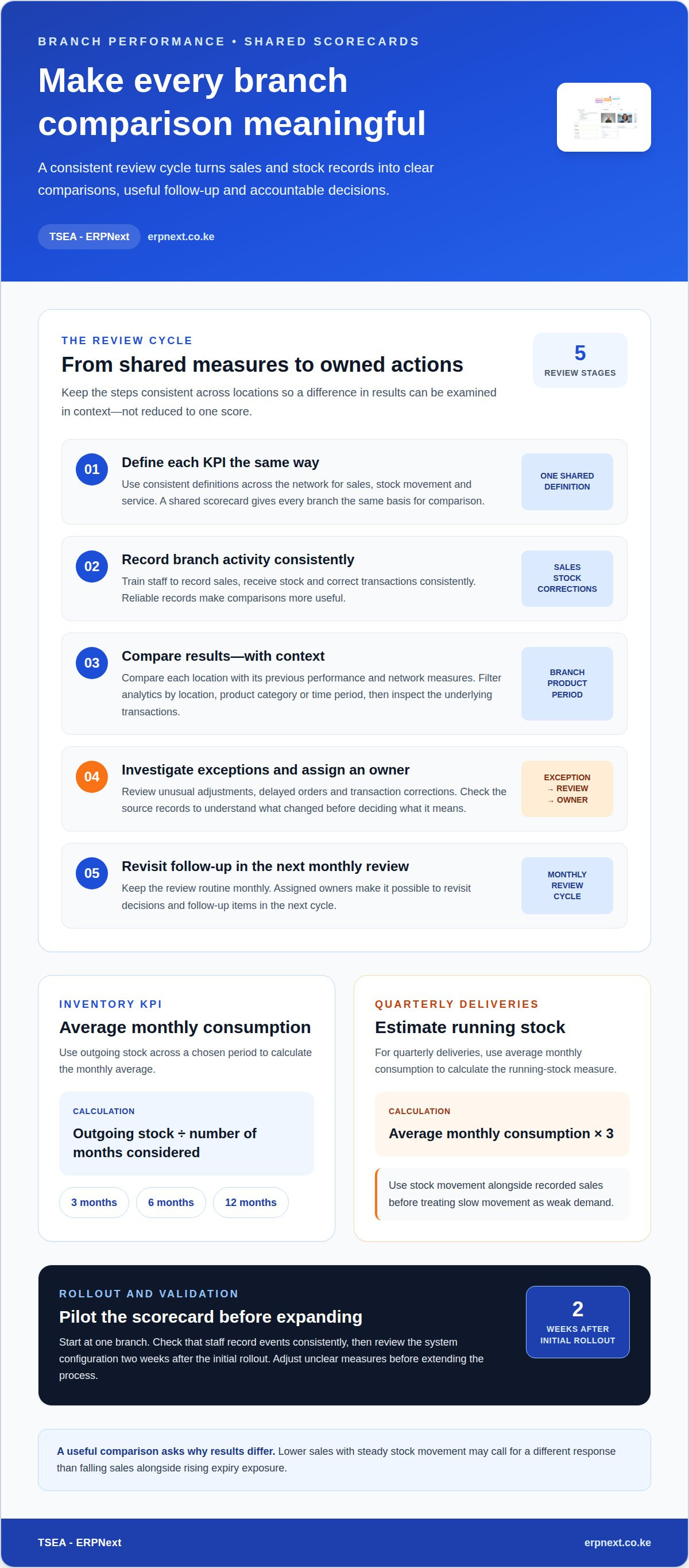
A shared scorecard compares locations using consistent measures. To manage pharmacy branches centrally, define every KPI the same way across the network.
Cloud-based systems let connected branches work with shared records, while on-premise systems run on locally managed infrastructure. The key difference is where data and system administration sit, and how each branch accesses them.
Branches need reliable internet to use shared cloud records. Hardware depends on the workflow and may include computers, barcode scanners or receipt printers. Train staff to record sales, receive stock and correct transactions consistently.
Monthly Branch Performance Reviews
A monthly review compares each branch’s results with its previous performance and network measures. This helps managers distinguish a local issue from a wider operational pattern. For example, lower sales with steady stock movement may call for a different response than falling sales alongside rising expiry exposure.
Review exceptions such as unusual adjustments, delayed orders and transaction corrections. Assign an owner to each follow-up so managers can revisit decisions in the next monthly review.
Branch Performance Analytics
Analytics turn sales and stock records into comparisons that reveal where results differ. Managers can filter by location, product category or time period, then inspect the underlying transactions. This helps show whether a change involves one product, one branch or a broader pattern.
Use consistent KPI definitions. For example, compare stock movement with recorded sales before treating slow movement as weak demand. A dashboard can flag outliers, while transaction details help explain them.
Pilot the scorecard at one branch before expanding. Check that staff record events consistently, then review the system configuration two weeks after the initial rollout. Adjust unclear measures before extending the process. These shared definitions help teams manage pharmacy branches centrally while keeping branch comparisons meaningful.
For inventory KPIs, calculate average monthly consumption using outgoing stock over 3, 6 or 12 months, divided by the number of months considered. For quarterly deliveries, running stock is average monthly consumption multiplied by 3.
Branch-level permissions and audit trails
Branch-level permissions determine which records and actions each staff member can access. Clear boundaries help protect sensitive information and make routine work accountable.
Branch-Level Access Controls
Assign access by role and branch, matching each permission to daily duties. A cashier might record sales at one location, while a branch manager approves stock adjustments there. Central administrators can manage shared settings without giving every employee access across the network. This limits unnecessary access and clarifies responsibilities.
Map permissions to specific tasks before assigning accounts:
- Allow sales staff to record transactions, but not change user access.
- Give receiving staff access to delivery records for their assigned branch.
- Reserve network-wide reports for managers who compare multiple locations.
Review access whenever an employee changes roles or locations. For example, moving a pharmacist to another branch should prompt an update to their branch access. Remove permissions that are no longer needed for the person’s duties.
Audit Trails and Enterprise Reporting
An audit trail records actions such as stock edits, approvals and user changes. It helps managers see who made a change, which record was affected and when it happened. If a branch’s stock figure differs from its supporting transaction, managers can trace the relevant adjustment instead of relying on memory or informal messages.
Use reports to review activity across branches, then filter by location, user or action. For example, a report on stock adjustments can reveal repeated corrections at one branch. Compare it with the source transactions before deciding whether the cause was a recording error, a process gap or an authorized correction.
Set a review routine: inspect unusual activity, record the reason for follow-up, and assign an owner. Keep report access limited to roles that need network-wide visibility. An ERP system for pharmacy operations can provide a central framework for managing these workflows.
Centralized procurement and supplier purchasing
Centralized systems coordinate purchasing and stock movement across pharmacy branches. A branch can request stock from another location or flag items for replenishment. Before approving the next action, managers review available quantities, demand and pending orders. Recording dispatch and receipt keeps both branches aligned.
Central purchasing brings branch requirements into one procurement view. Managers can compare supplier offers, review order history and coordinate decisions using shared records. A single supplier record also helps keep contact details and product information consistent across locations.
For each order, record the product, quantity, supplier, requesting branch and approval status. Match the delivery to the purchase record. If a branch receives fewer items than ordered, log the difference before updating available stock. This makes follow-up clearer and reduces confusion between purchasing teams and branch staff.
- Review branch requests together before placing supplier orders.
- Compare requested quantities with available stock across locations.
- Record transfers, dispatches, and receipts against the correct branches.
- Track outstanding supplier orders and delivery discrepancies in one view.
Base replenishment decisions on local demand and stock on hand. For example, a branch with a fast-moving medicine may need a different order quantity from a location with slower movement. Shared visibility helps managers consider a stock transfer before placing another supplier order.
A named MediCare Pharmacy Group testimonial reports KES 180,000 saved through centralized procurement in its first quarter. The example shows how coordinated purchasing can make spend easier to review. Your own results depend on order patterns, supplier terms, and how consistently each branch records demand.
Keep supplier performance visible alongside purchasing activity. Compare delivery completeness, order accuracy and recorded discrepancies using the same measures across branches. Managers can identify recurring issues, discuss them with the relevant supplier and adjust purchasing decisions based on a clear order history.
Compliance and controlled-drug monitoring
Shared workflows help branches record compliance activity consistently. Clear records make controlled-drug movements, prescriptions and sales easier to review across locations.
Standardized Compliance Workflows
Standardized workflows establish the same recording and review steps at every branch. This consistency helps managers compare records and follow up on missing entries. For example, staff can record a controlled-drug receipt, update its stock balance and document a discrepancy using defined steps. Managers can then review the same information format across locations instead of reconciling different branch procedures.
Regulations for Multiple Pharmacy Branches
Pharmacy branches in Kenya must follow the current requirements that apply to pharmacy practice, medicines, controlled drugs and patient information. Requirements depend on the activity and record involved, so a central process should map each workflow to the rules that apply. For example, document how prescriptions are handled, how restricted stock is recorded and who reviews exceptions. Keep procedures current as requirements change, and identify the responsible reviewer at each branch.
Central Management of Prescriptions and Records
A central system can organize prescriptions, sales and patient records by branch while giving authorized staff access to relevant information. A shared patient record can help staff see earlier transactions when someone visits another location. Link each entry to the correct branch, prescription and transaction. This supports consistent review and helps managers trace records without combining unrelated sales or patient details.
For controlled-drug monitoring, compare recorded receipts, sales, adjustments and remaining balances. Investigate discrepancies using supporting entries, then document the outcome and responsible reviewer. This creates a traceable process for each branch and helps managers spot recurring recording issues across the network.
Keep waybills, invoices, and packing lists for 3 years or longer, depending on current regulations. Store them so staff can retrieve the records for a specific delivery or branch.
Build these workflows into pharmacy chain management to coordinate records and oversight across locations.
TSEA - ERPNext: ERPNext
TSEA offers ERPNext and Pharmacy Chain Management for businesses coordinating pharmacy operations across locations. If your team wants to connect branch oversight, purchasing and compliance workflows, these offerings are a practical next step to explore.
Consider Pharmacy Chain Management when separate branch processes make consistent records and network-wide reviews difficult. ERPNext provides the platform for this offering, supporting a connected approach to management. The right fit depends on the workflows your pharmacy chain needs to coordinate and the operational visibility managers require.
Explore how ERPNext could support your pharmacy operations. Visit erpnext.co.ke to learn more or contact TSEA - ERPNext.
Make Your Next Move Count
Start by deciding which operational gap needs attention first. One pharmacy chain may need clearer branch reporting; another may need to align purchasing or recordkeeping across locations. A focused priority gives your team a practical starting point and helps shape how you manage pharmacy branches centrally as operations evolve.
TSEA - ERPNext offers ERPNext and Pharmacy Chain Management for businesses seeking a connected approach to pharmacy operations. Its offerings also include Hospitality. Consider how your current workflows, reporting needs, and branch responsibilities fit the way your team works, then explore whether ERPNext is a suitable platform for your plans.
Ready to discuss a more coordinated approach to pharmacy operations? Contact TSEA - ERPNext to explore the next step for your business. Keep building a clearer, more connected foundation for your pharmacy network.
Frequently Asked Questions
What software helps manage multiple pharmacy branches centrally?
ERPNext with Pharmacy Chain Management provides a shared platform for coordinating pharmacy operations. ERPNext is a cloud-based, modular ERP with modules including Inventory Management, Purchases, and Real-time Report & Analysis. These can support connected business records and reporting. Before adopting a system, map your branch workflows and decide which records managers need to compare across locations.
How can pharmacy inventory be tracked across branches in real time?
Use a shared inventory record and ask staff to enter each stock movement promptly. Record deliveries when they arrive, sales when completed and corrections with their reasons. Branch-level views help staff check local availability, while a network view helps managers identify items that may be available elsewhere. Useful stock visibility depends on accurate, timely entries.
How can a pharmacy chain centralize purchasing and supplier management?
Keep supplier records and product descriptions consistent across branches, then route purchase requests through a shared review process. Standard product identifiers make it easier to compare requests for the same medicine, even when branches use different shorthand. Managers can assess combined demand, review supplier order history and coordinate approvals. Record substitutions clearly so staff can distinguish the requested product from what was supplied.
How can pharmacy branches control access, audit transactions, and prevent fraud centrally?
Use individual user accounts, branch-specific access and permissions matched to each person’s responsibilities. Where practical, separate transaction entry from approval so one user does not control every part of a sensitive change. Review unusual adjustments and voided sales through recorded activity, then document the reason and follow-up. These controls strengthen oversight and help identify suspicious patterns, but no system can guarantee fraud prevention.


