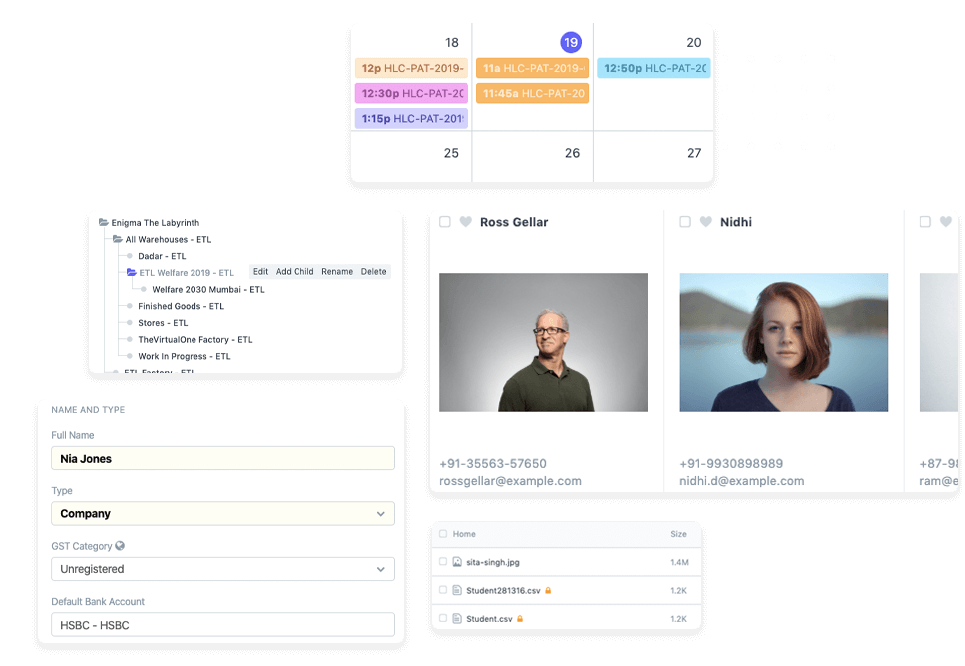

Disconnected systems can leave hotel teams working from different versions of the same operational picture. ERP software for a hospitality business brings functions such as finance, inventory, human resources and guest relationship management into one platform, helping teams coordinate daily work and decisions.
The guest-facing experience matters, but service also depends on what happens behind the scenes: whether staff can access useful information, supplies are available and costs are visible. An ERP does not replace thoughtful hospitality. It can give teams a more connected foundation for delivering it.
This guide explains what hospitality ERP can do, how it connects hotel operations and where it can support cost control and guest satisfaction. It also covers the challenges of fragmented systems and practical considerations when assessing ERP for a hospitality business in Kenya.
Key Takeaways
- See how hospitality ERP brings financial management, inventory, staff information and guest relationships into a more connected operational view.
- Learn how clearer cost and performance information can help hotel teams make better-informed decisions while supporting guest care.
- Understand how connected systems help departments coordinate, share information and respond to operational issues.
- Explore why fragmented software can complicate hotel operations and what an integrated approach can help streamline.
What is ERP for Hospitality Industry?
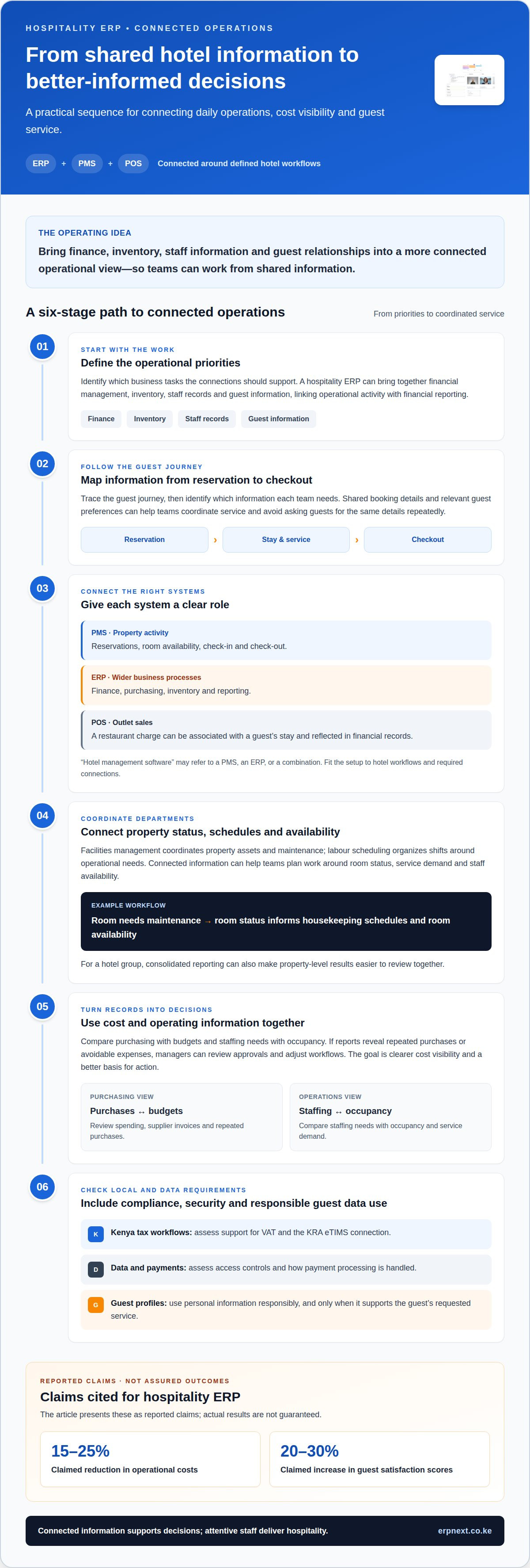
Hospitality ERP connects functions such as finance, inventory, staff records and guest information. ERP software for a hospitality business can link operational activity with financial reporting, helping teams work from shared information.
Financial Management
Financial management in hospitality ERP can track accounts payable and receivable, budgets and financial reports. Managers can review expenses alongside operational activity instead of reconciling separate manual records. For example, purchasing reports can show how department spending relates to budgets and supplier invoices.
In Kenya, assess whether a system supports the tax workflows your business needs, including VAT and the KRA eTIMS connection. Include these requirements in your financial systems evaluation.
PMS and POS Connections
Integration connects an ERP with a property management system (PMS) and point of sale (POS), allowing relevant information to move between systems. For example, a restaurant charge recorded through POS may be associated with a guest’s stay in the PMS and reflected in financial records.
For hotels and resorts, integration can reduce manual re-entry and help teams use consistent booking, sales and inventory information. Protecting guest and payment data also matters: assess access controls and how payment processing is handled.
ERP, PMS, and Hotel Management Software
A PMS focuses on property activity such as reservations, room availability, check-in and check-out. ERP supports wider business processes, including finance, purchasing, inventory and reporting. “Hotel management software” can refer to either system or a combination of both.
There is no single best system for every Kenyan hotel. ERP software for a hospitality business should fit its workflows, connect with the required PMS and POS tools, and support consolidated reporting across properties.
Facilities and Labour Scheduling
Facilities management coordinates property assets and maintenance, while labour scheduling organizes shifts around operational needs. Connecting these processes can help teams plan work around room status, service demand and staff availability.
For example, when a room needs maintenance, its status can inform housekeeping schedules and room availability. Clear asset records and schedules help hotels coordinate work and use operational information to improve efficiency.
ERP benefits for hotel costs and guest satisfaction
For a hotel in Kenya, linked operational reporting can show how purchasing, occupancy and guest service affect one another. The value comes from turning separate records into useful decisions, not simply adding more software.
Hotel Cost Benefits
Hotel cost benefits come from coordinating expense workflows and operational data, helping managers spot waste and act sooner. Hospitality ERP systems are claimed to reduce operational costs by 15-25%, while implementation is claimed to increase guest satisfaction scores by 20-30%; these are reported claims, not assured outcomes.
For example, managers can monitor purchasing against budgets and compare staffing needs with occupancy. If reports reveal repeated purchases or avoidable expenses, teams can review approvals and adjust workflows. This improves cost visibility and gives managers a clearer basis for action.
Guest Profiles and CRM
A customer relationship management (CRM) function brings guest details and interaction history together to support more personalised service. Staff can use relevant profile information, such as a recorded room preference, to prepare for a returning guest without searching separate records.
Connected profiles can also help teams coordinate requests across departments. A preference recorded by reservations can inform front-desk or service staff, helping create a consistent experience. Use personal information responsibly and only when it supports the guest’s requested service.
Guest experience can influence loyalty: a smooth arrival, accurate booking details and a timely response to a request all shape a stay. ERP cannot replace attentive staff, but shared information can help them respond with context and avoid asking guests for the same details repeatedly.
During implementation, map the guest journey from reservation to checkout, then identify which information each team needs. An integrated hospitality ERP platform can support coordinated workflows, cost monitoring and guest-focused service.
Hospitality ERP and integrated hotel operations
Hospitality ERP links processes across departments, helping teams use shared operational information to make decisions. For a Kenyan hotel, useful integration means more than transferring data: each connection should support a clear business task.
Connected Hotel Operations
Connected operations bring information from systems such as reservations, purchasing and finance into coordinated workflows. This helps managers understand how activity in one department affects another, rather than relying on isolated records.
For a group, consolidated reporting makes property-level results easier to review together. Teams can use combined insights to plan resources and identify processes that need attention. ERP software for a hospitality business is most useful when its connections serve defined operational priorities.
POS Integration and Guest Billing
POS integration links outlet sales with relevant guest and financial records. For example, a restaurant charge can be associated with a guest account, supporting clearer checkout and reducing repeated data entry.
Set clear rules for which system records each transaction and how corrections are handled. This helps finance teams trace a charge from sale to account entry, while staff can resolve billing questions using consistent records.
ERP Customization and Support
Customisation adapts system workflows and reports to a property’s operating model. A resort may need different purchasing approvals from a hotel with one restaurant, so the system should reflect actual responsibilities without adding unnecessary steps.
Integration and ease of use matter alongside customisation. Support and ongoing staff training help teams apply workflows consistently, handle exceptions and reduce errors as processes evolve.
ERP Selection and Implementation
Choosing ERP software for a hospitality business starts with mapping the systems and processes that need to connect. In Kenya, assess industry-specific needs, usability, PMS and POS integration, customisation, support and multi-property reporting.
Adoption risks include inconsistent legacy data, integration mismatches and difficulty adapting to changed workflows. ERP software for a hospitality business should be implemented with clear process ownership, prepared data and practical staff training. A phased rollout can help teams identify issues before extending new workflows across operations.
Fragmented hospitality systems
A mid-size hotel typically runs between 8 and 15 separate software products. Reservations, restaurant sales, purchasing and finance may each sit in different platforms. When those records don’t connect, staff re-enter details, managers reconcile conflicting reports, and operational decisions take longer. In Kenya’s hospitality industry, that fragmentation can obscure how daily activity affects revenue.
Consider a guest who charges dinner to a room. If the restaurant POS and property management system do not share information, staff may enter the charge twice or miss it at checkout. A separate finance platform then needs another update. These hand-offs create avoidable manual work and can undermine a consistent guest experience.
Disconnected tools also make enterprise reporting harder to scale. A group with several hotels may need to combine property-level figures manually before reviewing performance. ERP systems can connect business processes and bring information into consolidated reporting. More than 55% of businesses that adopted ERP systems saw an end to data siloing, showing why integration is central to the value.
Integration does not mean every application must be replaced. A hotel can retain a suitable PMS or POS while connecting its data with finance, inventory and reporting workflows. Map which system owns each record, then define how information moves. For example, a room booking, restaurant charge and supplier purchase should each reach the relevant operational and financial process.
As a hotel evolves, its system choices should support new properties, services and reporting needs without multiplying disconnected tools. No single platform should be treated as an oracle; decisions need accurate, shared information. Map the systems and hand-offs that slow work, then explore how hospitality ERP solutions can help connect operations and support more coordinated growth.
TSEA - ERPNext: Hospitality
TSEA - ERPNext offers Hospitality and ERPNext for businesses seeking a more connected approach to hotel operations. ERPNext is an all-in-one business management platform, and its hospitality offering connects this article’s focus on integrated systems with a practical next step.
Consider ERPNext when disconnected processes make it harder to coordinate operations, understand costs or support guest service. Start by defining which workflows and information your hotel needs to bring together, then align the system with those business needs.
TSEA provides ERPNext as a cloud-based business management platform. Contact TSEA to discuss how ERPNext and its Hospitality solution can support your hotel’s operational priorities.
Make Your Next ERP Decision Operational
Before moving forward, choose the operational outcome that matters most to your property. It might be clearer departmental accountability, smoother hand-offs between teams or a more dependable basis for planning. This priority gives the evaluation a practical focus and keeps the project centred on work that affects staff and guests.
Choosing ERP software for a hospitality business is also a change-management decision. Define who will own key processes, how teams will learn new workflows and what success should look like in everyday operations. A clear starting point helps your hotel move from software comparisons to a purposeful implementation plan.
TSEA - ERPNext offers Hospitality and ERPNext for businesses exploring connected operations. If you’re ready to discuss your priorities and possible next steps, contact TSEA - ERPNext. Build a more coordinated foundation for your team, and keep guest care at the heart of progress.
Frequently Asked Questions
What is a Hotel ERP?
A hotel ERP is business software that helps manage connected functions such as finance, purchasing, staff records and operational reporting. Unlike a reservation-focused tool, ERP processes can relate a supplier invoice to a purchase and the relevant department budget. Exact functions depend on the system’s modules and configuration.
What is ERP and Why is it Important?
ERP stands for enterprise resource planning, a way to coordinate information and workflows across an organisation. It helps teams make decisions from consistent records instead of reconciling separate files. For example, a manager reviewing a maintenance request can consider its purchasing status and department approval in the same process, clarifying ownership and follow-through.
What does hospitality ERP software include for hotels, restaurants, and resorts?
Hospitality ERP may include finance, purchasing, inventory, human resources, customer relationship management and reporting. A hotel restaurant, for instance, can connect ingredient purchasing and stock records with supplier invoices, while a resort can use shared staff and asset records across departments. The right combination depends on the property’s operating model and the workflows it needs to coordinate.
How do hospitality ERP systems compare on features, integrations, and ease of use?
Compare systems against the work your teams perform, not the length of a feature list. Map essential tasks such as supplier approvals, stock adjustments and departmental reporting, then assess how each platform handles them. Consider integration with existing tools, the clarity of staff screens and whether reports answer practical management questions. A role-based demonstration can reveal workflow friction.
Which ERP systems integrate with hotel PMS, POS, accounting, payroll, and booking platforms?
Integration depends on the ERP and each platform’s available connection method, so compatibility varies by system and configuration. Assess each required connection separately: PMS reservations, POS charges, accounting entries, payroll records and booking data may need different workflows. ERPNext is cloud-based, and its Hospitality solution is in the early development stage. Define the required integration scope as part of rollout planning.
What are the best hospitality ERP systems available in Kenya?
There is no single best system for every Kenyan hotel. Choose one that fits your workflows, integrates with the required PMS and POS tools, supports consolidated reporting, and offers suitable customisation, support and staff training.


